How the Doubling Cube Works in Clean Backgammon: Rules, Equity & Timing

- The doubling cube multiplies the match stake (1x -> 2x -> 4x -> 8x).
- You may only propose a double at the start of your turn, BEFORE rolling your dice.
- If the opponent accepts (Take), they claim sole ownership of the cube and can redouble later.
- If the opponent declines (Drop), they forfeit the match immediately at the current single-point stake.
What Is the Doubling Cube?
Invented in New York clubs in the 1920s, the doubling cube transformed Backgammon from a casual pastime into a profound strategy sport. Marked with numbers 2, 4, 8, 16, 32, and 64, the cube serves as a score multiplier.
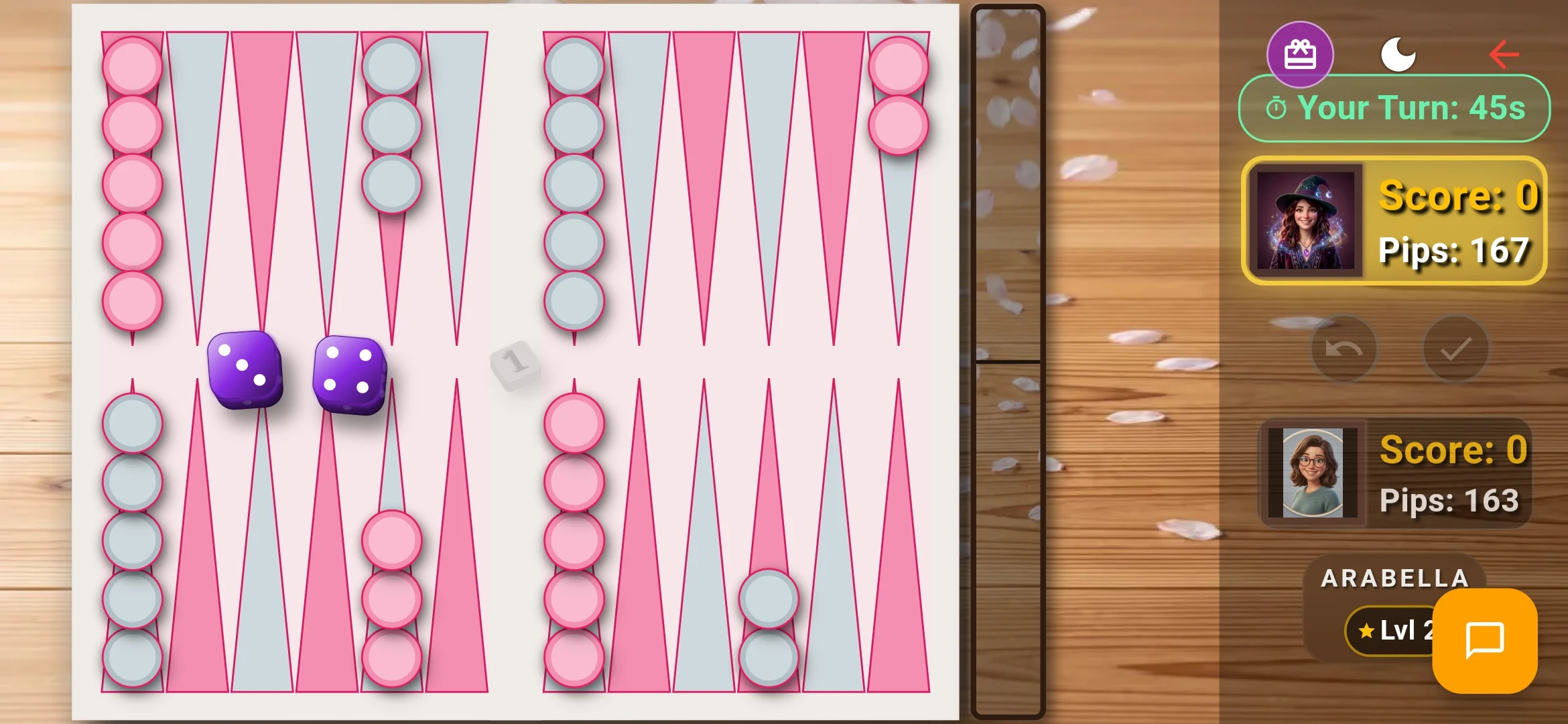
In Clean Backgammon, an interactive 3D Doubling Cube button is positioned on the side of the board. Whenever you hold the right to double, the button illuminates.
Rules of Offering a Double
A player may only propose a double at the very beginning of their turn, PRIOR to rolling the dice. Once you shake or roll the dice, your opportunity to double on that turn has passed.
When you tap the doubling cube, your opponent receives an immediate decision prompt with two choices:
1. Accept (Take): The match stakes double to 2 points, and the opponent claims physical ownership of the cube.
2. Decline (Drop): The opponent immediately concedes the match, losing only 1 point.
Cube Ownership: The Power to Recube
At the start of a match, the cube is centered at 64 (representing 1x) and neither player owns it. When Player A doubles and Player B accepts, Player B takes exclusive possession of the cube.
From that moment on, only Player B has the legal authority to redouble the game to 4 points. Player A cannot propose another double until Player B initiates it!
The 25% Mathematical Take Point
When an opponent doubles, should you accept or decline? Basic probability theory provides the answer: in a 1-point game, if you drop, you lose 1 point 100% of the time. If you accept at 2 points, your break-even winning probability is exactly 25%.
If your calculated chance of winning the position is greater than 25%, mathematically you should ALWAYS accept the double!